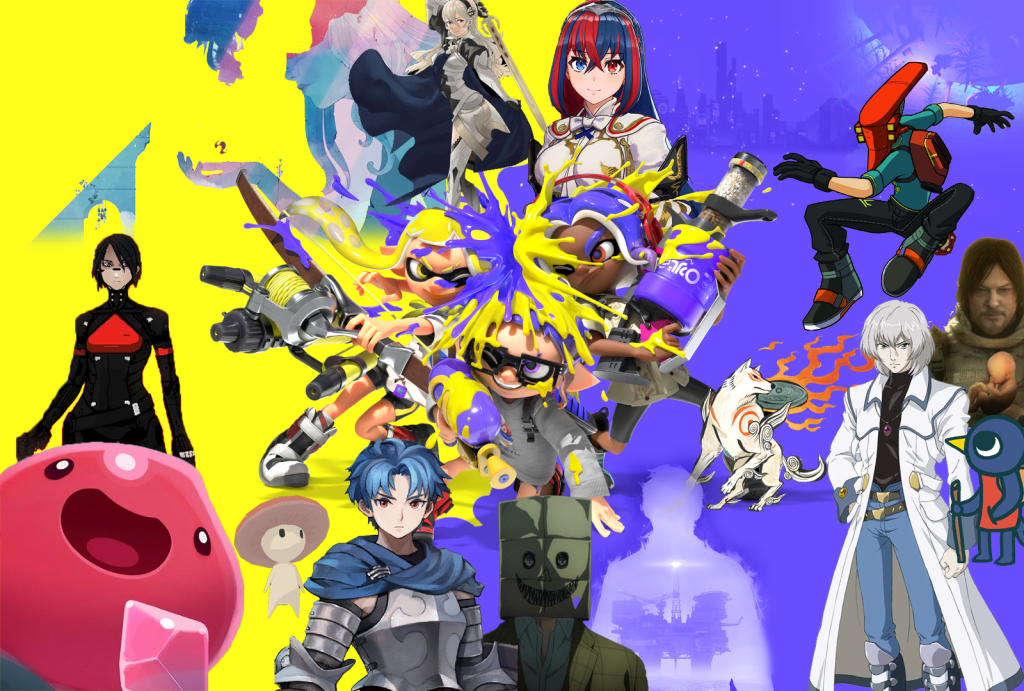
I have an ever-growing list of games which I either missed upon release, have had recommended to me, or have picked up absurdly cheap second-hand or during Steam sales, and I have made a solid attempt this year to significantly dent this backlog. (Have I ended up with even more to play next year? How dare you ask me that.) Nevertheless, below are my thoughts on pretty much all of what I have played this year in my frantic attempt to get through my ever-expanding hoard of unfinished games, in an approximate worst-best order. I enjoyed pretty much everything I played, though, with the unfortunate exception of Outer Wilds.
Outer Wilds [released 2019, PC]
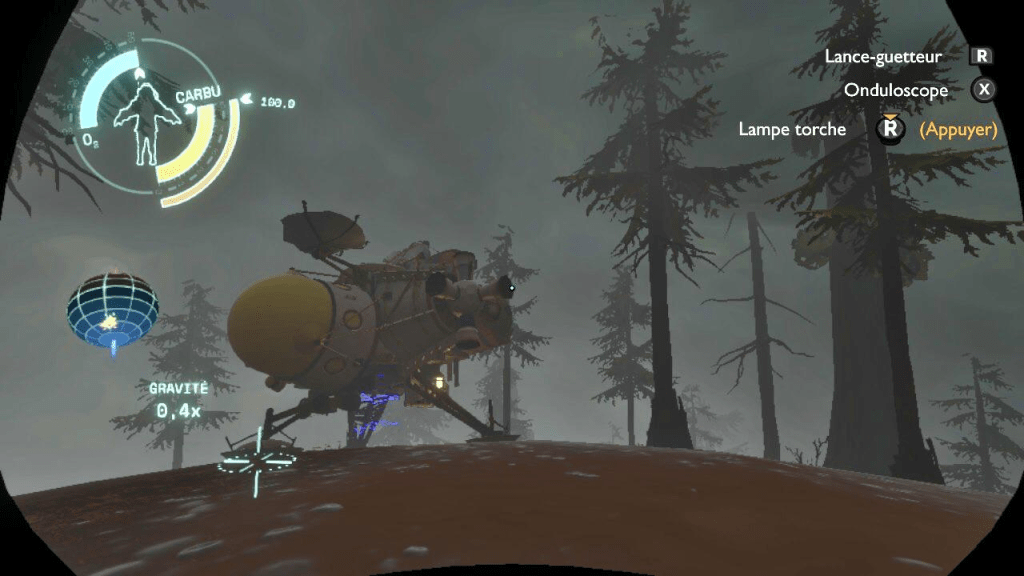
I really wanted to like Outer Wilds. It’s a sci-fi timeloop story, which I typically tend to love, and it’s absolutely revered by folks online. I found myself coming away rather disappointed by it though – I really didn’t gel with much of it at all. I found the presentation to be very amateur and unpolished, with much of the worlds and characters looking like little more than something I would have created in Spore back in the day. I’m not the kind of person who needs stunning graphics to enjoy a game, but Outer Wilds just looks so basic and rudimentary in a lot of places that it didn’t compel me to explore its world at all. Perhaps this is a stylistic choice, but so many of the landscapes and caverns looked almost untextured and unfinished. I found myself fighting at every turn against the game’s obtuse design – everything from the ship controls to the worlds themselves just felt like they didn’t want me to succeed. I’d spend each run desperately trying to find anything of use, only to find myself thrust into a deep ocean by a maelstrom, crushed to death by a cave filling with sand, eaten by an enormous space fish, killed by some unseen invisible force in a cave, or even having my autopilot fly me into the Sun. I was just left baffled and confused by everything that I came across. Maybe I need to spend more time with the game to truly understand what the heck is going on, but my 4 and a half hours spent with Outer Wilds were, sadly, not remotely pleasant, and I don’t feel particularly encouraged to return.
Slime Rancher [released 2017, PC]
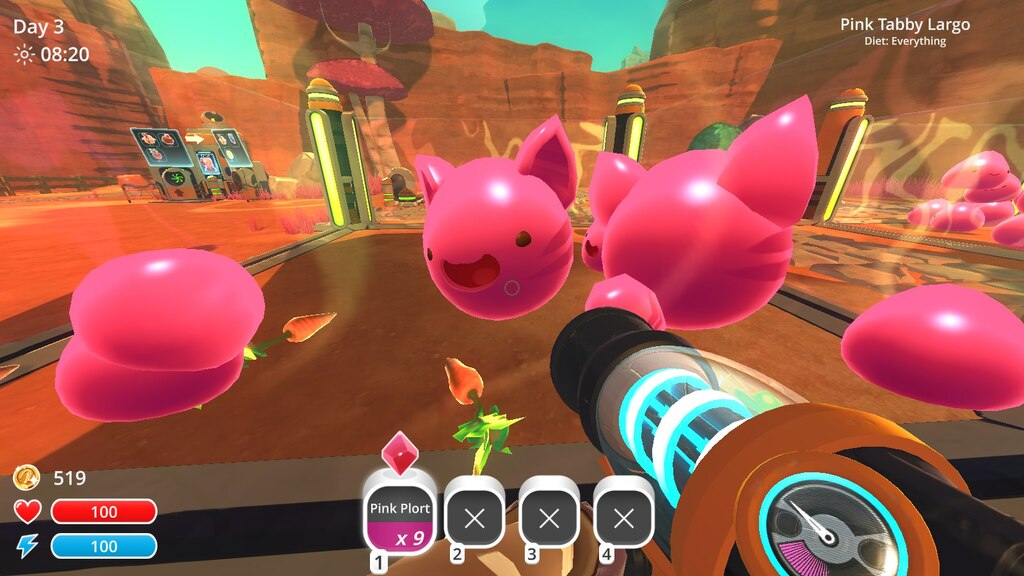
This is not the kind of game I am typically interested in, but I got it on sale and was in the mood for something a little less involved. The premise of Slime Rancher is incredibly straightforward – you are the owner of a “ranch”, which starts out as an empty plot of land, on a strange planet filled with (mostly) adorable slime creatures. These slimes all produce different kinds of resources, so you need to go out and collect them, building pens for them. There are many different types of slimes, and they can be crossbred to create even more varieties. It’s a simple gameplay loop that becomes increasingly complex as you seek out rarer varieties and grind for the next upgrade or next building, but it didn’t do enough to keep me engaged much past that initial novelty. It’s definitely a fun enough time, and something to play while you whack on a podcast or something, but to me that isn’t the best endorsement of a game. It’s pleasant enough busywork, and it’s charming in its own way, but it didn’t hold my attention for too long.
Dystopika [released 2024, PC]
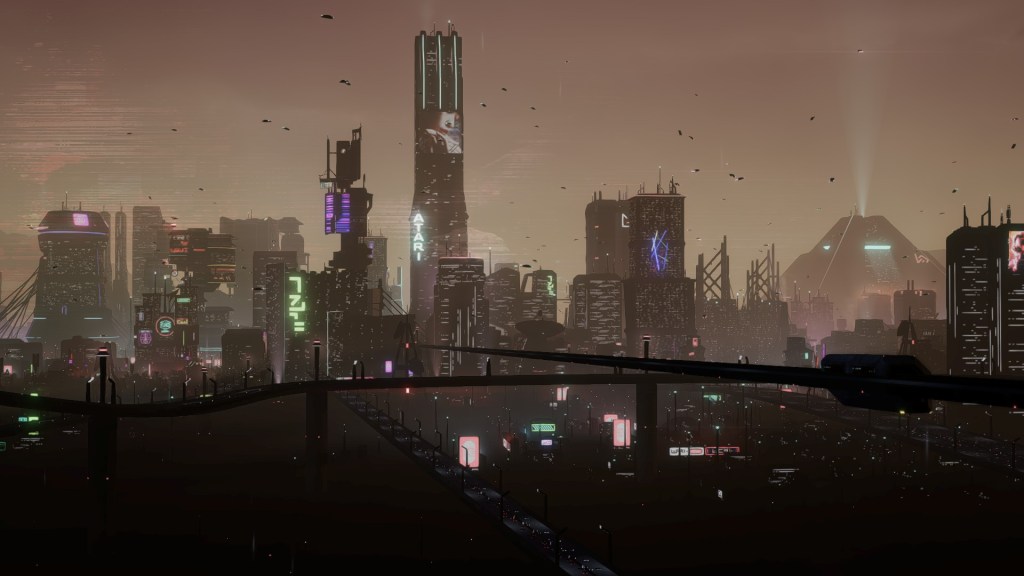
Not too much to say about this one. Less of a game and more of a creative canvas, Dystopkia lets you run wild and imagine the dark sci-fi urban sprawl of your dreams. Drenched in the style and atmosphere of the likes of Blade Runner and Cyberpunk, you can very easily create sprawling metropolises and behemoths. There are no objectives, no management requirements, no fail states – this is simply a creative tool. It may feel lacking to some if you go in expecting the likes of Simcity or Cities: Skylines, but really Dystopika is more akin to a sci-fi Tiny Glade. You don’t have to worry about zoning permits, traffic flow or plumbing – it’s just a fun and relaxing tool to vibe with, let your creativity flow and to create stylish screenshots or videos of your creations.
Smushi Come Home [released 2023, PC]
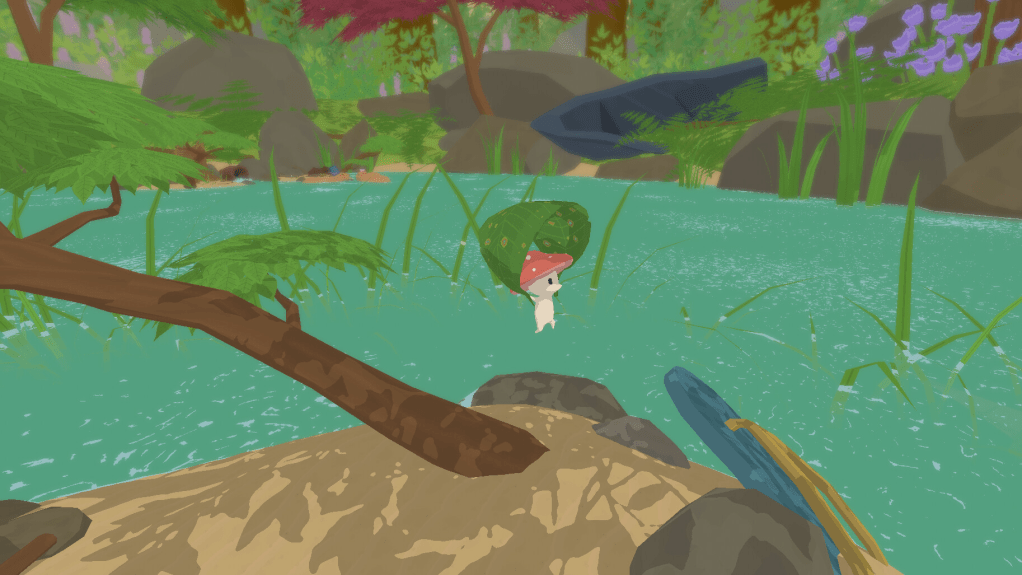
Smushi is a small indie puzzle platformer that feels like it belongs on the GameCube. Its cel-shaded art style and leaf-gliding mechanics are straight out of Wind Waker, whilst its characters and quests feel inspired by Chibi Robo, and its miniature protagonist wandering the woods and interacting with everyday items feels very Pikmin. It’s not a particularly challenging time, but it definitely had me scratching my head during some of its puzzles, and smiling like an idiot at the charm of its world and characters. Definitely one to pick up if you enjoyed any of the games I mentioned above, and if you’re up for a fairly chilled out and wholesome little adventure across a couple of evenings.
Gris [released 2018, Switch]
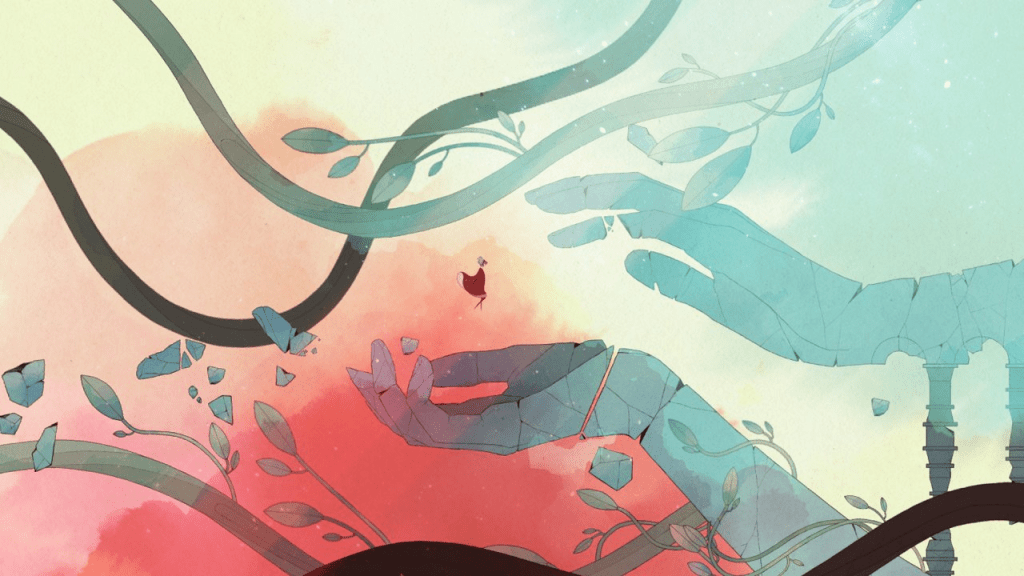
Gris was the debut title from indie studio Nomada, and it has become absolutely adored due to its outstanding presentation. It’s a short yet stunning platformer with puzzle elements where you awaken in a world drained of colour. You have to traverse the land and reclaim different colours, gradually bringing vibrancy back to the world. Its beautiful visuals combined with its atmospheric sound design made for a short yet unforgettable adventure. This game reminded me a lot of Journey or Abzu if they had been designed in 2D – lonely, gorgeous and minimalist, with artistic flair that make it a memorable and touching experience throughout.
Bomb Rush Cyberfunk [released 2023, Switch]
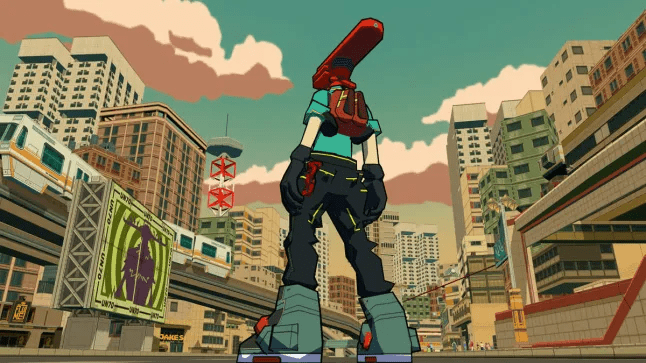
This is, unquestionably, the best “in all but name” spiritual successor to a game that I have played. Tired of SEGA sitting on the licence for Jet Set Radio for 20 years, the folks over at Team Reptile decided to take matters into their own hands by creating their own familiar, yet legally distinct, take on the genre. Every single thing about this game, from the gameplay and graphics, to the characters and soundtrack, ooze that same slick 00’s style that Jet Set Radio has. You explore the futuristic cityscape of New Amsterdam, tricking and grinding across rails, billboards and cables as you spray graffiti and fight off rival gangs and the police. It’s not reinventing the wheel, but I don’t think it set out to. It’s a funky and nostalgic joy from start to finish.
A Short Hike [released 2019, PC]
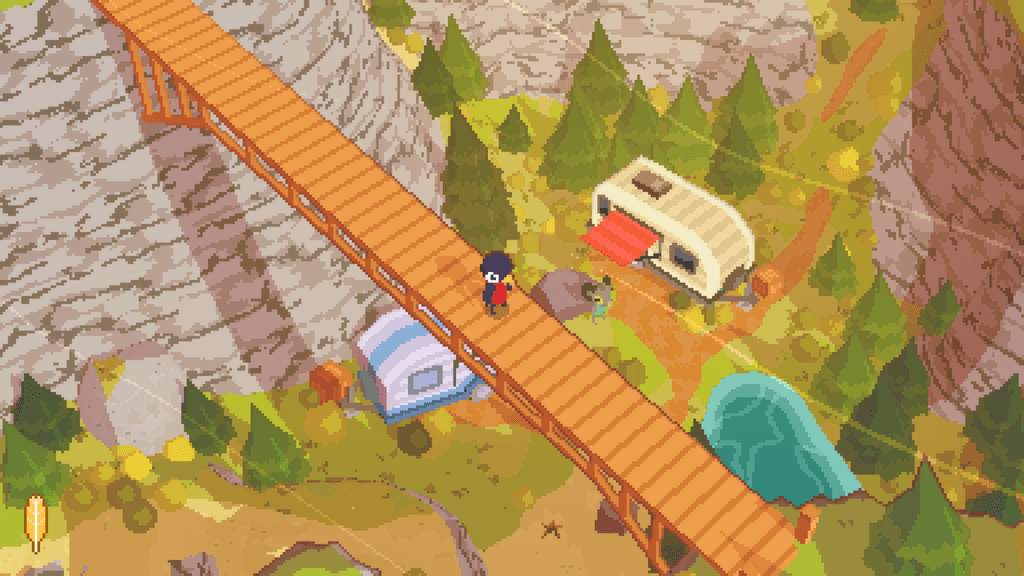
This is an absolutely adorable little adventure that can be breezed through in a couple of sessions, but it’s full of charm and warmth. A Short Hike isn’t about saving the world, killing baddies or even getting a high score. It’s just a little story about an anthropomorphic penguin who needs to climb a hill in order to get phone signal to call her mum. It borrows from the aesthetic of Animal Crossing and could quite safely be called a “cosy game”. There are no threats to speak of – just the sense of adventure as you explore this miniature world, interacting with quirky characters and collecting enough golden feathers to improve your jump and flight abilities to progress. It’s frequently on sale for around £4, and it makes for a great evening’s cosy entertainment.
Fire Emblem Engage [released 2023, Switch]
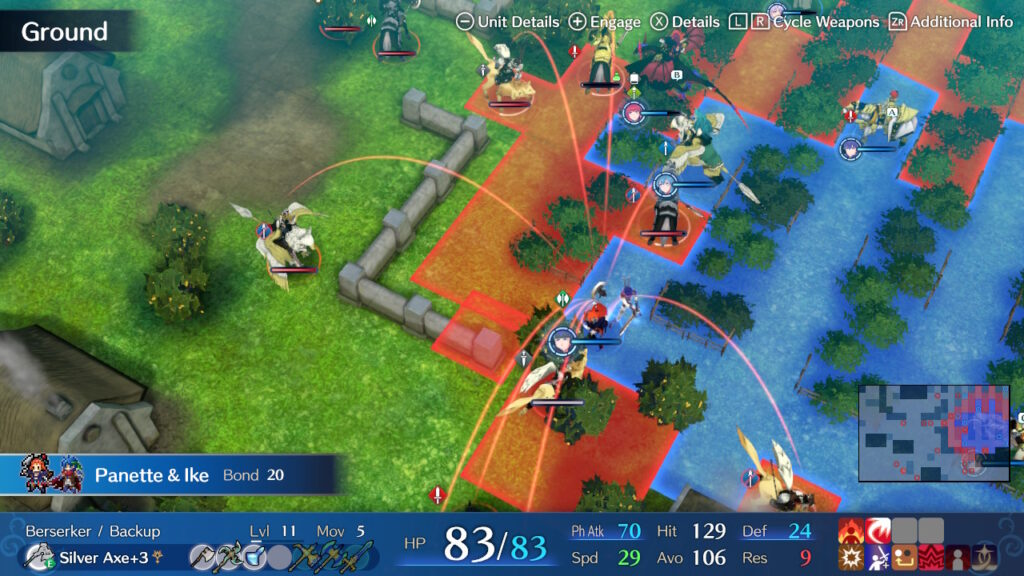
After really not getting along with the life-sim elements and school setting of Fire Emblem: Three Houses, I had initially bypassed Engage upon its release. I managed to pick it up towards the end of last year pretty cheap though, and finally got around to it recently. I can confidently say that I like it a lot more than Three Houses – it feels stripped back and a lot closer to the Fire Emblem games of yore, which I hold in very high esteem. The core turn-based strategy RPG elements that the series thrives on are at their absolute best here, with some of the strongest gameplay that the series has seen. This game’s main innovation is the new Emblem Rings system, which enables your units to call upon the aid of heroes from the series’ past. It’s a great mechanic that offers up an impressive amount of freedom, as any unit can be paired with any ring and eventually inherit any of heroes’ abilities. Unfortunately, I am not quite so keen on the story of Engage, or the shift in art direction. The plot is far too simplified and straightforward compared to literally any of its predecessors, and the art direction feels far too colourful and cute, with half of the cast looking like they would be more at home at a circus than on a battlefield. It’s not my favourite game in the series, not by a long shot, but ultimately the qualms I have with the game are mostly easily overlooked when the core strategy gameplay is so strong and addictive.
Death Stranding [released 2019, PC]
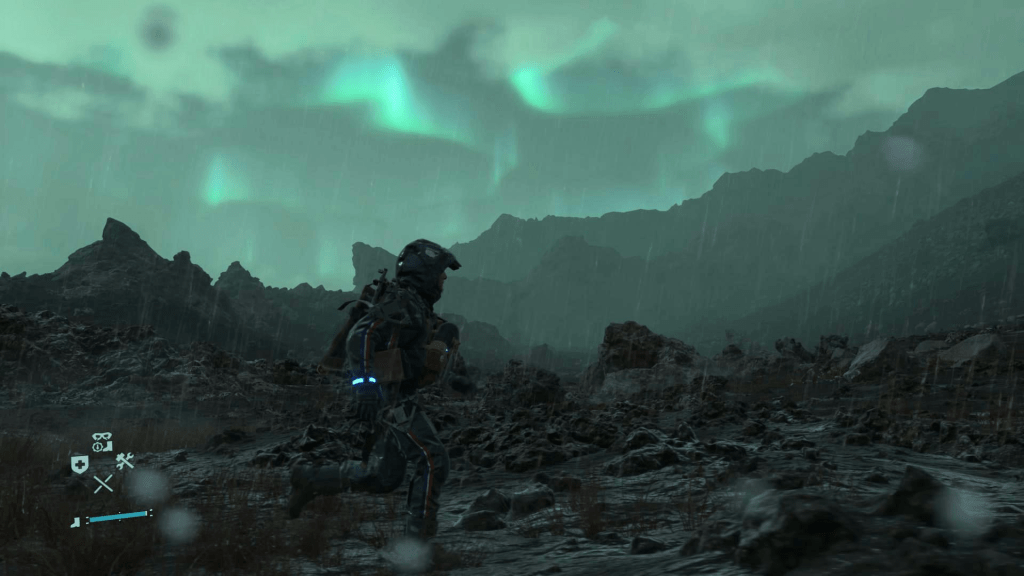
Death Stranding is one of those games that is difficult to pitch. I think a lot of people were put off when it was initially revealed that the bulk of the game is spent…walking. This is a very unconventional game, with little in the way of combat or traditional action to speak of. Instead, it’s a deeply immersive and meticulously-crafted vision of the future where the story, atmosphere and setting seek to grip you tightly and ask you to trust where it is headed. It was Hideo Kojima’s standalone studio’s debut title, and all of his trademark tells are here on full display. It’s complicated, stylish, haunting, goofy and outrageous all at once, and it features an ensemble of famous Hollywood faces, which Kojima is becoming increasingly known for. After bouncing off the game pretty quickly when it first launched, I came back to it for a second round and I am so glad that I did. Put simply, Death Stranding is one of the most incredible games I have played in terms of atmosphere, visuals and vibes. It requires patience and tolerance for moment-to-moment gameplay that isn’t the most enthralling, but it’s a thoughtful and meditative experience, and every step that you take adds up to become more than the sum of its parts.
Okami HD [released 2018, Switch]
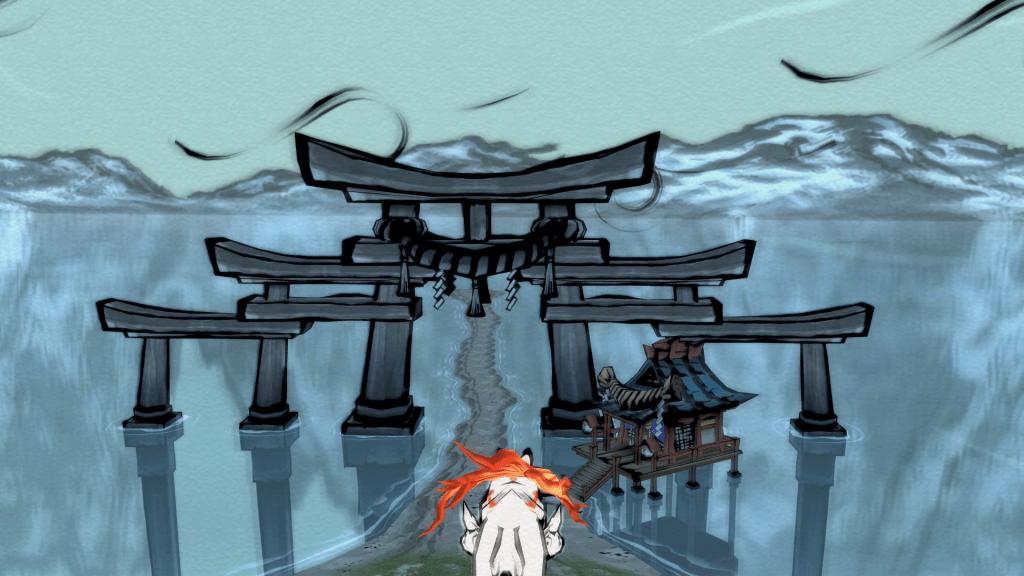
This is a game I have been aware of for a long time. Okami is regularly touted as the best Zelda game that isn’t a Zelda game, so I am honestly surprised that it took this long for me to get around to playing it. Okami HD may be a slightly modernised version of the game, but its mid-00s identity and design philosophy are on full display here. This is a double-edged sword – it ends up feeling refreshingly devoid of some of the more tiresome modern gaming trends, but at the same time it sometimes falls prey to an old-fashioned game design flaw where the single solution to a puzzle is an obscure one that is poorly explained, and you are left entirely unable to progress until you solve it. Okami is slow to get going, but as the world opened up and I gradually gained more abilities, I found myself having a pretty good time with it. Its stunning brushstroke art style gives it an ethereal, mythical quality, and this works well in a game themed around Japanese mythology and folklore. I actually found myself stopping to take screenshots or just soak in the atmosphere multiple times, which I think speaks volumes for the game’s art direction. The whole paint concept also ties into the abilities you unlock, which are all activated by mimicking brushstrokes which I thought was a nice novelty. Overall, minor 00s clunkiness aside, I think Okami is an excellent time. Capcom announced last year that they are working on a sequel, so I will definitely be keeping an eye out for that.
Signalis [released 2022, Switch]
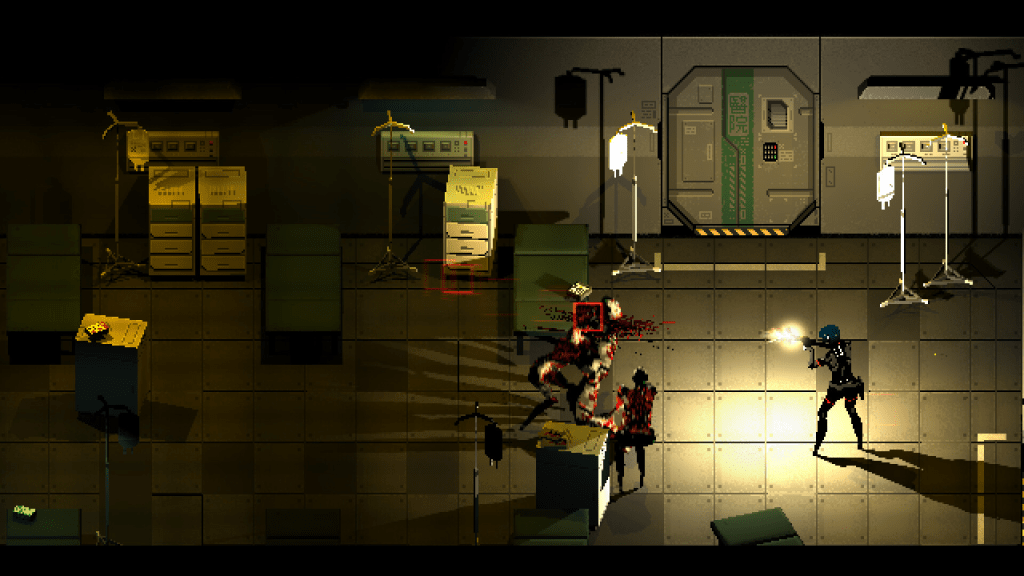
It feels like the N64/PS1 era of survival horror is having something of a renaissance lately through indie studios. The likes of Crow Country, Mouthwashing, Tormented Souls and Signalis all borrow heavily from the early 3D era of horror titles like Resident Evil and Silent Hill, with Signalis leaning heavily into simple polygonal graphics and its CRT filter to create an analogue-feeling sense of dread, obscuring detail and clarity for the player. This lack of clarity lets the player’s mind fill in the dark, grainy edges of rooms with their own fears, which makes Signalis a very effective survival horror experience that manages to feel like more than simply an homage to spooky titles of yore. It wears its influences on its sleeve, taking inspiration from everything from Ghost in the Shell and Evangelion to H.P. Lovecraft and The Shining. I’m absolutely rubbish at it, and I hate respawning enemies in games where inventory space and ammo are so limited, but I have a lot of respect for the amount of stress and tension that it is able to muster inside me.
Still Wakes the Deep [released 2024, PC]
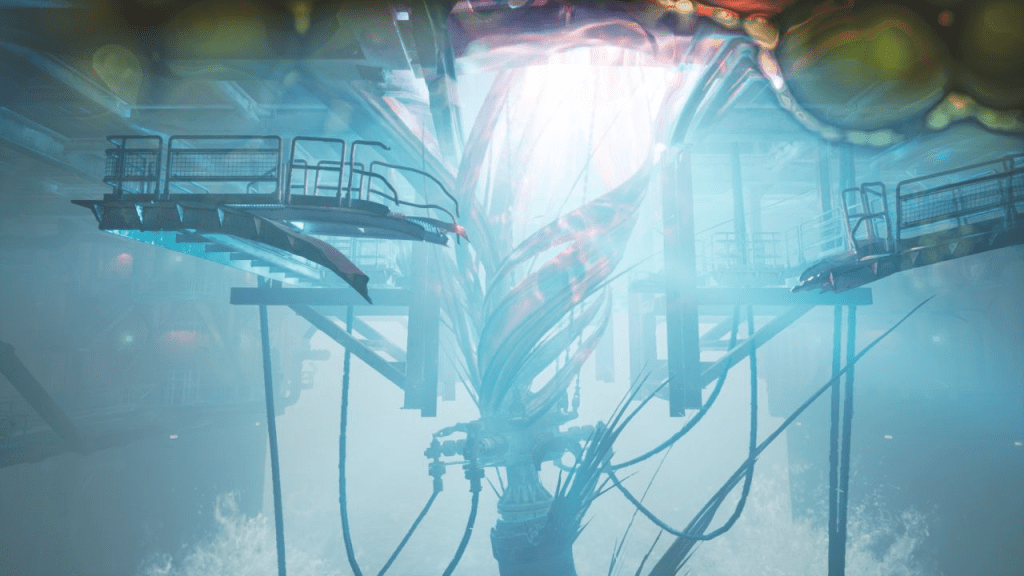
The Chinese Room have become renowned for their “walking simulator” games such as Dear Esther and Everybody’s Gone to the Rapture, both of which I thoroughly enjoyed, so I was pleased to hear that they were working on an eldritch horror title. Still Wakes the Deep is an incredibly well-crafted rollercoaster ride of a game – it may as well be on-rails, but the meticulous attention to detail and dedication to bringing a 1970s oil rig off the shore of Scotland to life really elevate this experience. It’s only around 3 hours or so in length, but these are action-packed and tense, with the whole experience playing out like an interactive horror film. It’s horrific, heartbreaking and awe-inspiring in equal measure, and it features some of the most horrendous creature designs that will be living rent-free in my head for the rest of my life.
Emio: The Smiling Man – Famicom Detective Club [released 2023, Switch]
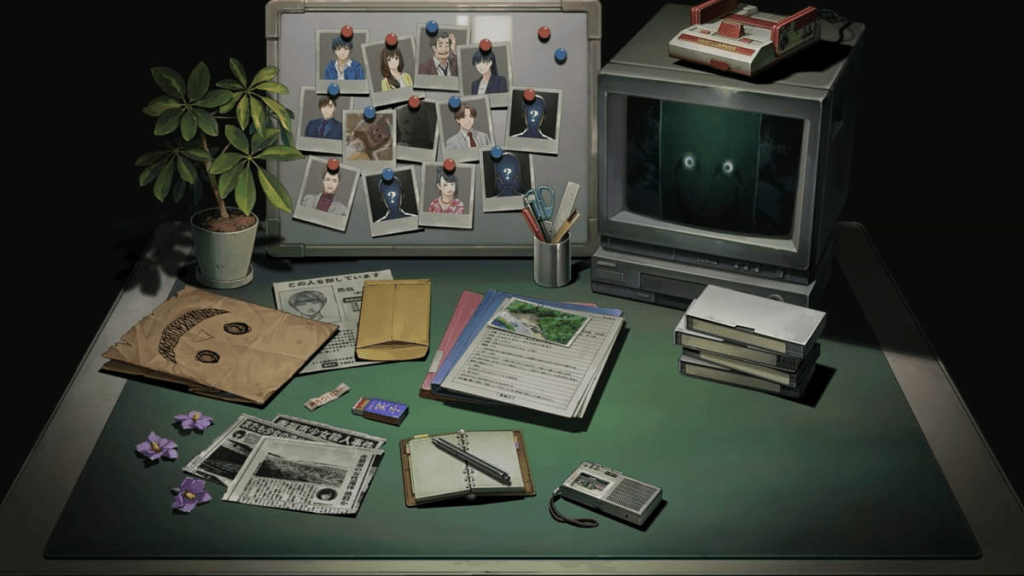
I’d previously only really dipped my toes into the visual novel genre, having played a couple of the Ace Attorney games back on the DS. I’m not sure what compelled me to try out the revival of Nintendo’s long-dormant Famicom Detective Club, but I am glad that I did. A gripping mystery involving a murder that seems to line up with an old urban legend in a Japanese town takes you on lots of twists and turns that is beautifully presented and well-written. I occasionally found myself getting stuck and having to brute-force every single option I had available to me in order to proceed, but I fear that is just an obtuse staple of the genre. It’s not overly long, but Emio: The Smiling Man is a suspenseful and engaging story with an excellent soundtrack that is still stuck in my head. I will likely take a look at the remakes of the original NES games which released on Switch at some point too.
Castlevania: Dominus Collection [released 2024, Switch]
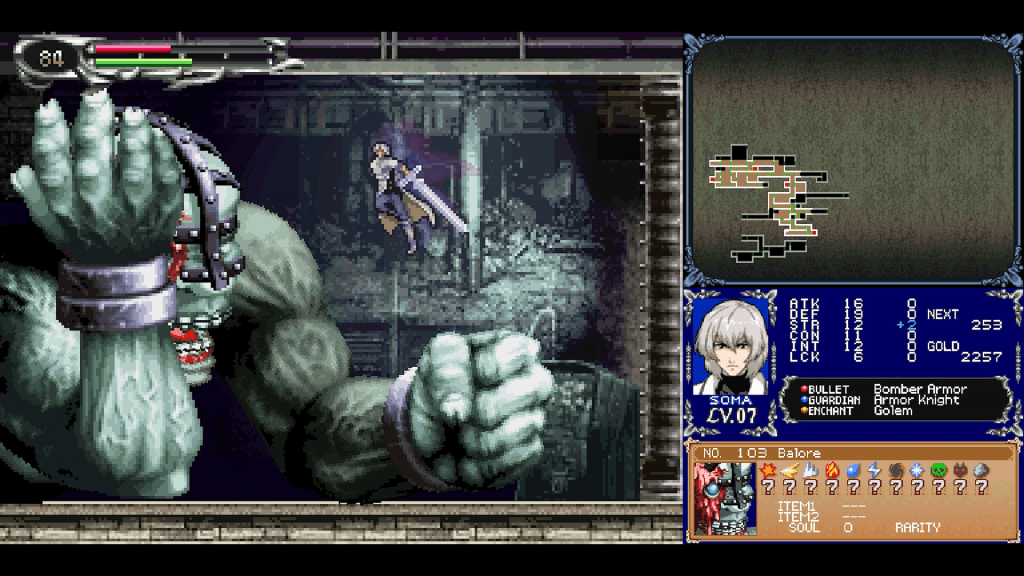
A collection comprised of the three Castlevania games released on the Nintendo DS, Dominus Collection is arguably the best way to play them in 2025. All of the information that was displayed across the bottom screen in the original games such as the map and stats are shown at the side of the screen, reducing the size of the main action, but ensuring that you can always see everything you need at once. The addition of elements such as remappable controls, rewind and save states help to make the games feel a little less obtuse, and I was able to feel pretty justified in using save states to prevent runbacks from bosses as I had already beaten the games in their original forms on the DS back in the day. For me this was a very pleasant trip down memory lane, particularly with Dawn of Sorrow which was my first Castlevania game, and Portrait of Ruin which is probably still my favourite game in the series. If you’re into the Metroidvania genre at all, any of the recent Castlevania collections are an excellent place to get your fix, offering very good value for money and great ways to play these classic titles.
Unicorn Overlord [released 2024, Switch]
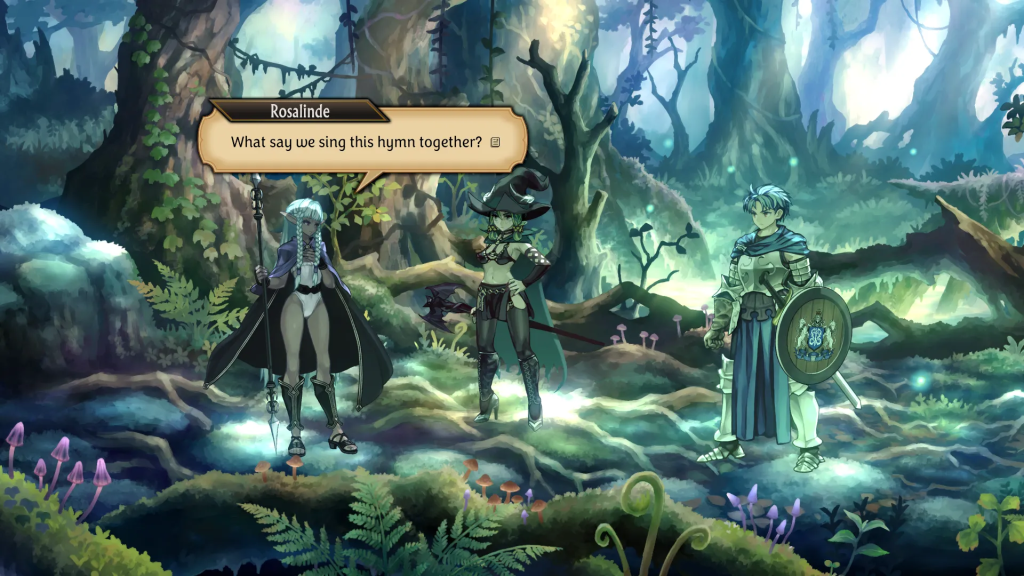
This game has some of the most stunning sprite work I have ever seen. It’s a beautiful, sprawling, enormous tactical RPG that is not too dissimilar to Fire Emblem in its setting and story. Where it differs, though, is the gameplay itself. Rather than moving units around on a grid turn-by-turn, you’re moving units freely in real time. You also group your units together to form teams, and you can tweak formations and behaviours of your soldiers so minutely that I was constantly tinkering and amending my squads throughout. Its story is a fairly boilerplate fantasy affair, but its large cast of fully voiced characters are memorable, expressive and varied, and its excellent gameplay made this a greatly enjoyable game that I couldn’t put down. Most appealing for me, though, was the Unicorn Overlord’s art style. Battles between units take place in gorgeous 2D landscapes littered with characters whose animations ooze style. All in all, it’s a love letter to the genre and an enormous, sprawling adventure that spans entire continents and dozens of hours, and I loved every moment of it.
Fire Emblem Fates: Birthright [released 2016, 3DS]
Jesus Christ. More Fire Emblem? What a nerd.
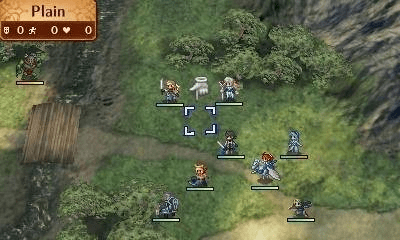
Fire Emblem Fates was the follow-up to the enormously popular Awakening on the 3DS. Intelligent Systems did something quite interesting with Fates though, taking a leaf out of Pokémon‘s book and releasing multiple versions of the game on the same day. Unlike Pokémon though, the two main versions of Fates, Conquest and Birthright, differ greatly. After the first few missions of the game, the two versions offer vastly different branching paths that alter the rest of the game so greatly that they are essentially separate games. I played Conquest back in 2016 as it was posed as the more challenging of the two, and I preferred the more western medieval-inspired theming to Birthright‘s more Asian-inspired flavour. Finally coming back to Birthright was great though, and it was interesting to use a different cast of characters and to revisit key battles and scenes but see them play out almost completely differently. For me, Fire Emblem peaked on the 3DS. It’s my favourite of the art styles and presentations that the series has adopted, and it’s also the peak of its gameplay, with just enough downtime between missions to keep you busy without diluting or bloating the experience. I was worried that returning to a 3DS game after playing newer entries on newer hardware would shatter my fond memories of the series on Nintendo’s last dedicated handheld system, but I am very pleased to admit that my worries were unfounded – Birthright remains excellent. I think overall I preferred the difficulty and more unusual story of Conquest, but it’s still a great game nonetheless. Perhaps one day I will get around to Revelation, the secret third version of the Fates games which was released as an expansion…
Splatoon 3 [released 2022, Switch]
Up until playing Splatoon 3, I would say that I liked the series. I’d played the story modes of both Splatoon on the Wii U, and Splatoon 2 on the Switch. I’d dabbled a little in online matches, but I don’t think the games fully gelled with me.
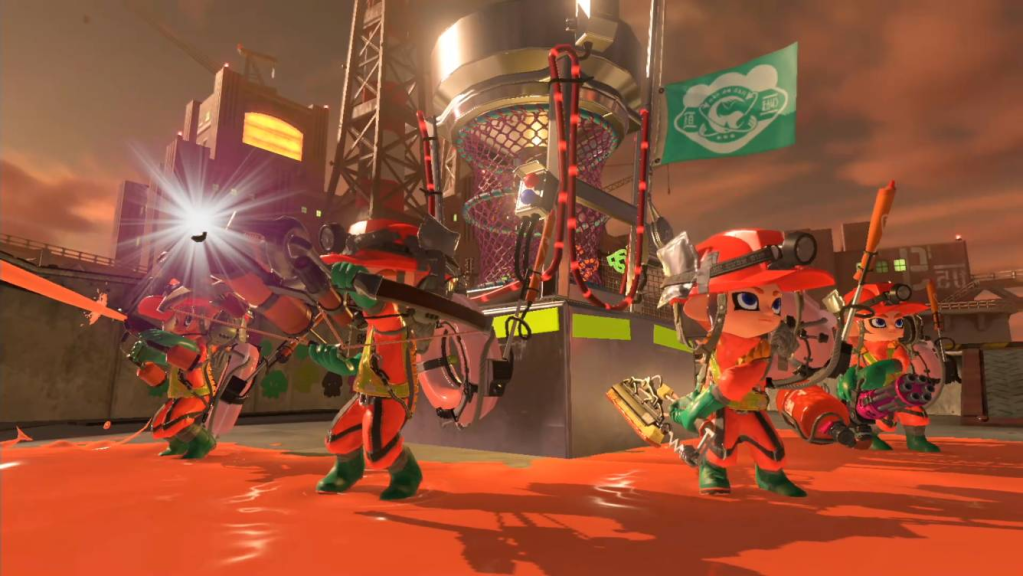
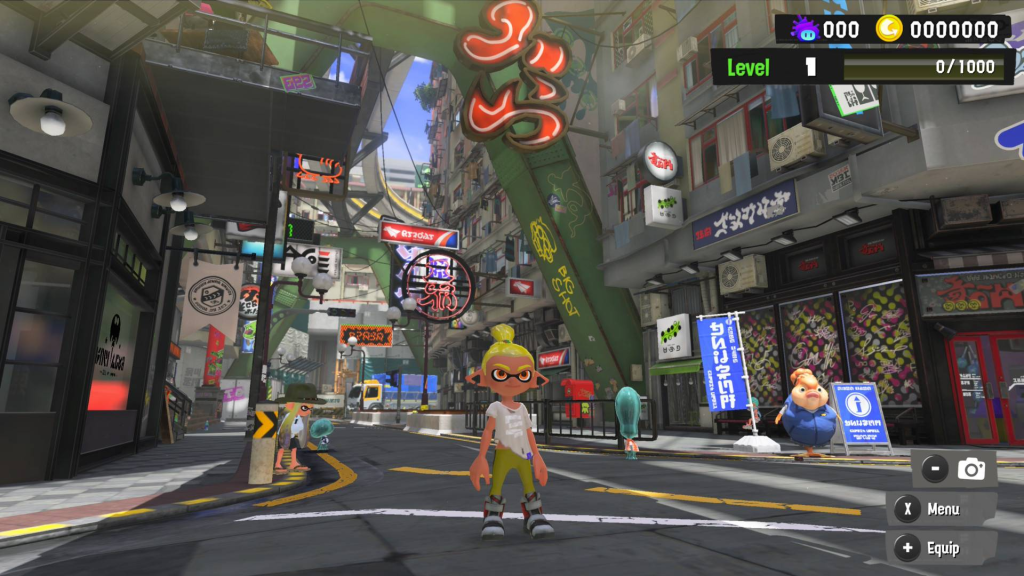
Enter Splatoon 3. Following a Switch 2 performance update and a swathe of new online content, it felt like a good time to jump on in and give it a whirl. I’m not sure specifically what caused it, but something clicked while I was playing this game – I get it now. Splatoon 3 feels like a hub for a number of different modes which manage to keep the same core gameplay but apply it into very different contexts. Its campaign feels like a 3D platformer, its competitive multiplayer is a third-person shooter, its wacky and addictive horde mode (amusingly titled Salmon Run) is a frantic co-op survival experience and its excellent expansion Side Order is essentially a whole roguelike game unto itself. I really enjoy how all of the individual elements of the game fit together to form a living, breathing cohesive world, all tied together by the game’s lore, worldbuilding and community elements which bleed through each mode but are put front and centre in the hub spaces. Splatoon has an enormous fan community, and it’s great to see the passion and excitement that the playerbase has when new maps release, or there is a new Splatfest event. It feels like a genuinely fresh and unique experience that is truly unlike any other game I can think of. Playing Splatoon 3 has got me excited for the upcoming Splatoon Raiders, which I believe is due to launch next year.
In case you missed it, here were my top 10 games released in 2025.
Happy New Year, and I hope to catch you again in 2026!
 thegameoverarchives.com
Leave a comment