I don’t play extraction shooters. Hell, I don’t really even play multiplayer shooters anymore. The last time I was truly invested in a multiplayer FPS title was with Halo 3 and then Halo Reach, circa 2011. I have dabbled here and there over the years with the likes of Battlefield (Bad Company 2 and Battlefield 3 being my personal favourites) and a very brief love affair with Overwatch, and I tried to get into Halo Infinite, hoping that it would be a return to the golden Bungie era of the Xbox 360 (it wasn’t), but I can say with confidence that the overwhelmingly vast majority of my time playing games has been spent in singleplayer experiences.
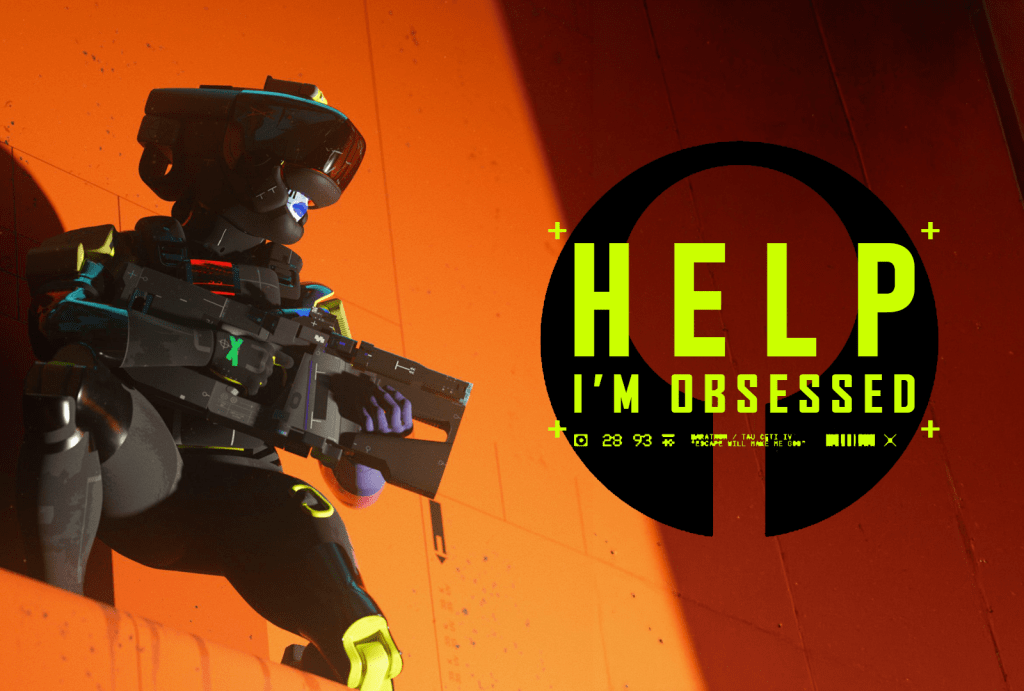
Imagine my surprise, then, when I found myself not only enjoying Bungie’s latest release, but developing a bit of an obsession with it. The kind of obsession where it’s not just about playing the game – it’s about engaging with its world and lore, its art style and music, and becoming part of the game’s community. As of writing this, if I’m not playing Marathon, I’m thinking about Marathon – we’ve all been in that place with a game before.
But, in the words of David Byrne – how did I get here? How did this game manage to sink its claws into me, when I have become so estranged from the multiplayer shooter landscape for so long? And an extraction shooter of all things – one of the more notoriously niche and more hardcore subgenres within the space. Well, that is exactly what I am here to attempt to unpack and examine in this piece.
The Bungie DNA
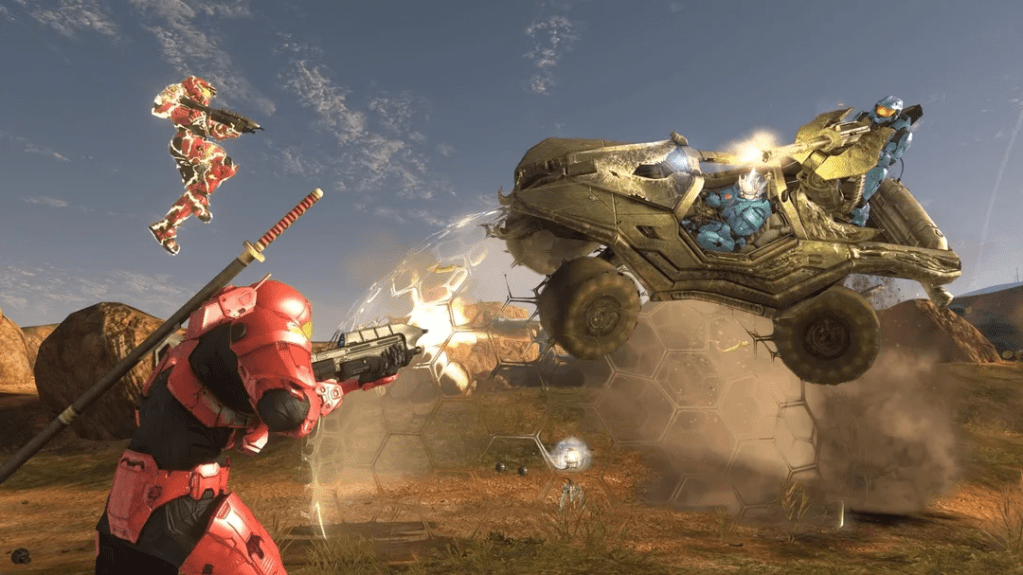
Bungie have long been crowned the “kings of gunplay”, with decades of experience with the genre. From the classic Marathon games of the 1990s, to their landmark Halo trilogy, to their MMO/FPS hybrid Destiny, their titles have always led with tight, satisfying gameplay that give players a great sense of weight, precision and feedback when landing shots on their foes. Examining their latest release through the eyes of a once-avid Halo fan, I will try to unpick what it is about Marathon that has captivated me so.
Halo’s iconic weapon, the Battle Rifle, served as the foundation for much of its multiplayer gameplay. If you can learn how to consistently land bursts of headshots onto your opponent, whilst strafing effectively to avoid the same fate yourself, you are well on your way to success in online games. The satisfying sound of breaking an enemy’s shields, allowing you to land that deadly killing blow, is something that few titles can match in terms of pure player gratification. Many similar elements in Halo were simple in concept, but incredibly rewarding and fun to pull off: landing a sticky plasma grenade on an opponent, filling someone with rounds from the iconic Needler and causing a chain reaction explosion, or the crack of a headshot with the hefty sniper rifle. The blend of creative gameplay elements mixed with a sandbox-feeling environment and responsive feedback to your actions creates a cohesive experience that enables the player to feel empowered and in control, opening the door for a high skill ceiling, experimentation and chaos.
These same core elements are tangibly present too in Marathon. Weapons and equipment feel like a suite of tools for the player to use as they please in a sandbox that feels responsive and alive. Different ammo types have different strengths and weaknesses, there is a variety of almost 30 different guns that are suited for different scenarios, with some weapons offering alternative fire modes to provide even further flexibility. Throw in seven different “shells” which essentially act as the game’s different classes, each with their own unique set of active and passive abilities, and you have a varied toolset of options to suit your playstyle. Bungie’s gameplay has always felt like a buffet that allowed players to lean into the style that suited them best, and Marathon delivers here. From the Destroyer shell’s support shield and missile salvos, the Recon shell’s explosive drone and pulse ability, to the Assassin’s smoke cloud and active camouflage, each plays differently and offers a suite of unique abilities that further amplify the variety and sandbox feel to runs.
In addition to Bungie’s signature gunplay and sandbox feel, Marathon is full of other Bungie staples. Names and iconography from previous games appear here, making for interesting easter eggs and references for those who are read up on their Halo, Destiny, Myth and Marathon lore. The likes of ONI, Traxus, MIDA and the famous “reclaimer” glyph are all persistent elements that make these games feel connected in some way. It’s nothing earth-shattering, but it’s fun to find the similarities and shared terminology, and it has served to make me feel a little more welcome in the world of this iteration of Marathon.
Sights and Sounds
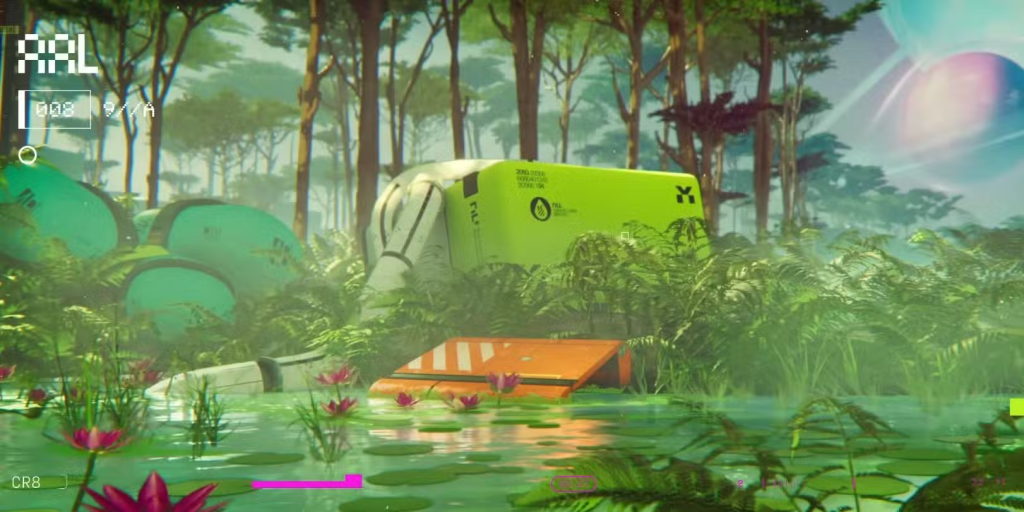
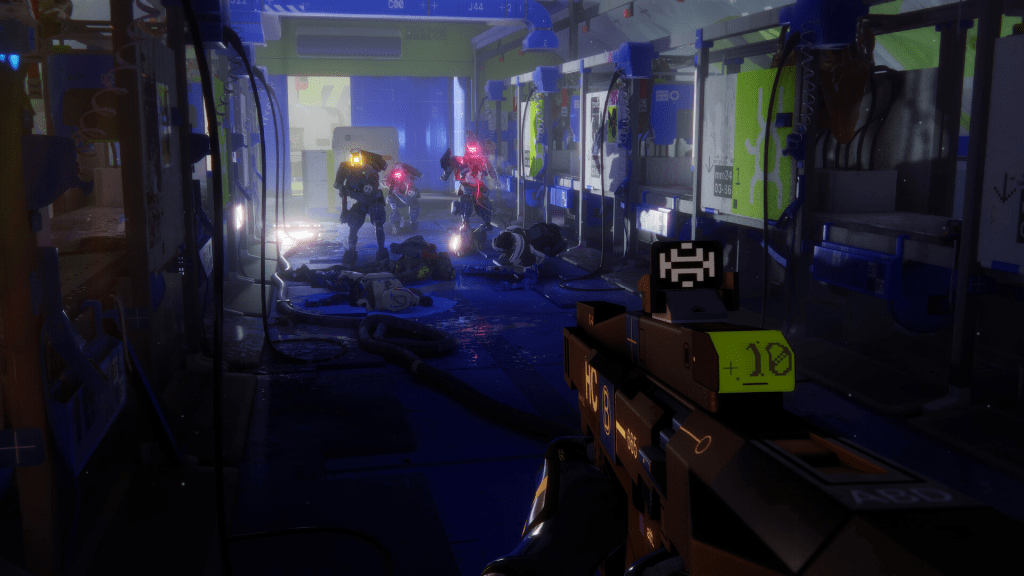

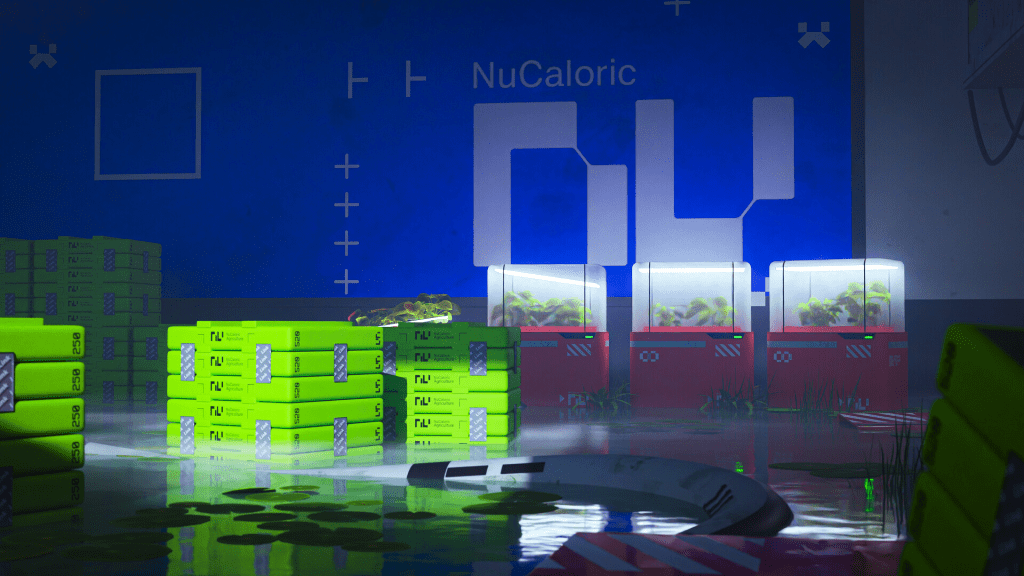
Perhaps the most striking thing about the game is its visuals*. In a world where the majority of multiplayer shooter titles can pretty definitively fit into one of two camps – Fortnite/Overwatch-inspired animation with cartoonish visuals or realistic military shooters à la Call of Duty, Battlefield or Tarkov, Marathon manages to carve out a genuinely refreshing aesthetic and art style that manages not to feel like its retreading old ground. Everything in the game, from the buildings and decor to the player models and weapons, feels like it has been 3D printed. Objects and elements are comprised of vibrant CMYK colours, with everything being plastered in sci-fi depictions of printers marks, bleeds and margins. Bungie have cited WipeOut, Mirror’s Edge and Ghost in the Shell among some of their key inspirations, and although I think that many of the inspirations can be traced back in its design, the end result is a fascinating take on a futuristic dystopian hypercapitalist hellscape, and I commend it for managing to visually stand on its own two feet in an increasingly saturated space.
The game’s UI, menus and HUD also manage to fit into this utilitarian hyperfunctional aesthetic, with text appearing mostly in simplistic monospaced courier fonts in boxy menus that draw from interfaces found in early computers and 1980s tech, whilst still managing to feel cold and futuristic, and not derivative.
Perhaps the cherry on top of all of this, though, is Marathon’s sound design. The game’s soundtrack is an eerie assortment of synthy, glitchy electronic tunes that will dynamically shift to match the intensity of the gameplay, and it serves to wrap the experience up into a cohesive identity. Ryan Lott’s infectious score has been getting a lot of plays outside of the game for me, and I have found that the unsettling and often haunting score elevates gameplay, especially during tense shootouts or extractions. Code Race is a standout example that is emblematic of the overall style of the soundscape present in Marathon.
In addition to the soundtrack, the in-game sound is excellent too. The punchy sounds of guns and explosives, the cold robotic clunks and beeps of machinery and UESC patrols, the squelchy sounds of poisonous spores and ticks, and the tense patter of footsteps as you try to hide in the corner from a stalking player – it all creates an immersive experience that feels dangerous, vivid and real.
*It is of course worth noting that Bungie got into pretty hot water over plagiarism relating to various in-game assets which were found to be using the work of an artist by the name of Fern Hook, or ANTIREAL. Whilst I don’t think that the game’s entire identity was founded upon this artist’s work, a significant amount of artwork elements had to be reworked following this accusation and subsequent admittance. Thankfully, a settlement seems to have been reached, and the artist is also now featured in Marathon’s credits, but this does sadly still leave something of a blemish on an otherwise refreshing and iconic visual landscape that has been created, and I feel it is still worth highlighting, despite the praise I am giving for the overall visual design.
Gameplay Loop and Lore
I think one of the main reasons I fail to engage with many modern competitive multiplayer games is that I am not very compelled by matches that amount to nothing more than “shoot baddy”, or “get 50 kills”. Even games such as Overwatch, which appear to have put a fair amount of thought into who their characters, feel devoid of context when there is no singleplayer, no significant story and no meaningful acknowledgement of why you are pitted against other players. As someone who loved Halo for both its singleplayer and its multiplayer, I believe that both halves of the experience served to enhance the other. Getting better at the multiplayer made you understand the game’s sandbox more deeply, and allowed you to become better at the singleplayer by utilising tactics or combinations you might not have otherwise considered, and knowing the story and world of the singleplayer made you appreciate details and locations in the maps on offer in multiplayer.
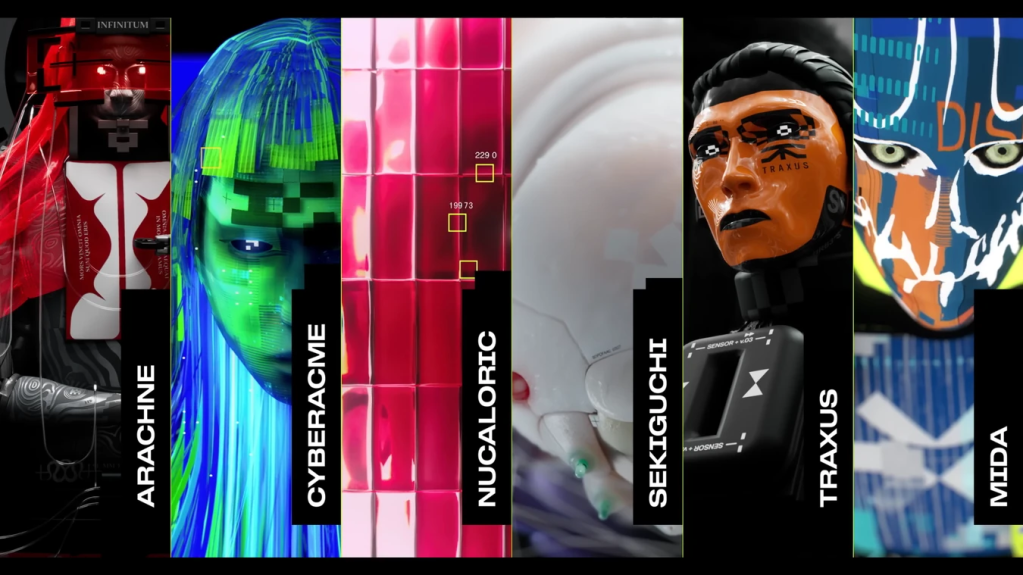
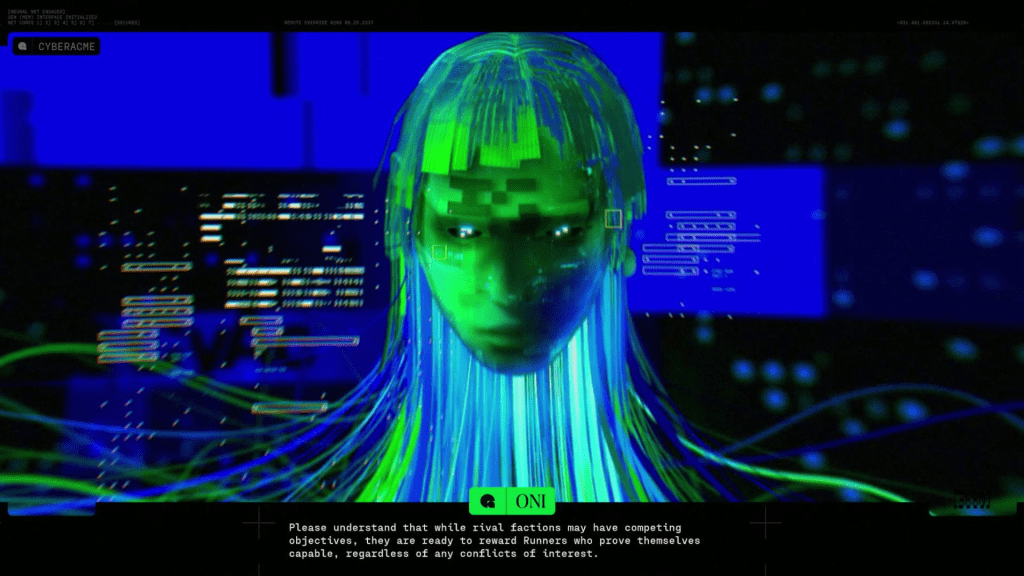
In the same vein, Marathon manages to achieve a cohesion here – although the game is fully online and offers nothing in the way of singleplayer content, it isn’t simply asking the player to fight in deathmatches devoid of context. The entire premise of the game is that you are a…consciousness, who is being thrust into a 3D-printed body and beamed down to Tau Ceti IV, the setting for the game, in order to work contracts for the game’s six factions. It’s entirely up to you which tasks to pursue, and this creates a great sense of variety across your time spent in-game. You might be looting and hacking, sneaking around compounds trying to avoid players and NPCs, conducting corporate espionage for NuCal or CyberACME. You might be deliberately seeking out other players in order to earn the respect of the bloodthirsty ARACHNE faction. You might be trashing the place and smashing windows to cause chaos for the MIDA revolutionaries. Or, you might be ignoring all of that entirely and seeking to gather the best gear that you can, be that from vaults and storage littered across the expansive maps, or from the corpses of other players.
What I enjoy most about Marathon is that there is always a reason for what you are doing – there is context to why you are fighting, or not fighting. You can engage with the in-game factions to gain upgrades, advance your reputation with them and advance the story to piece together exactly what is going on. And you can choose to tackle this in teams of three up against other teams, or drop in solo against other lone players. Both options manage to feel significantly different in how they play – squad play requires communication, cohesion and support, with players encouraged to spot and call out enemies and use tight tactical manoeuvres to outwit opponents, while solo play feels like a lonely, dangerous plunge into a hostile world where careful movements and quick thinking are crucial. You have to pick your fights, and you are not some invincible supersoldier – you’re vulnerable, and there is value in knowing when to flee, wait it out or take the shot. It makes for moments where you feel like a genius that masterfully outplayed your foes, but it also makes for moments where you were the one being outplayed, and you end up dead. But you can’t be discouraged by losing your gear upon death – every run is a lesson, and every new life is a new opportunity to tackle the game’s systems, contracts and loot however you please.
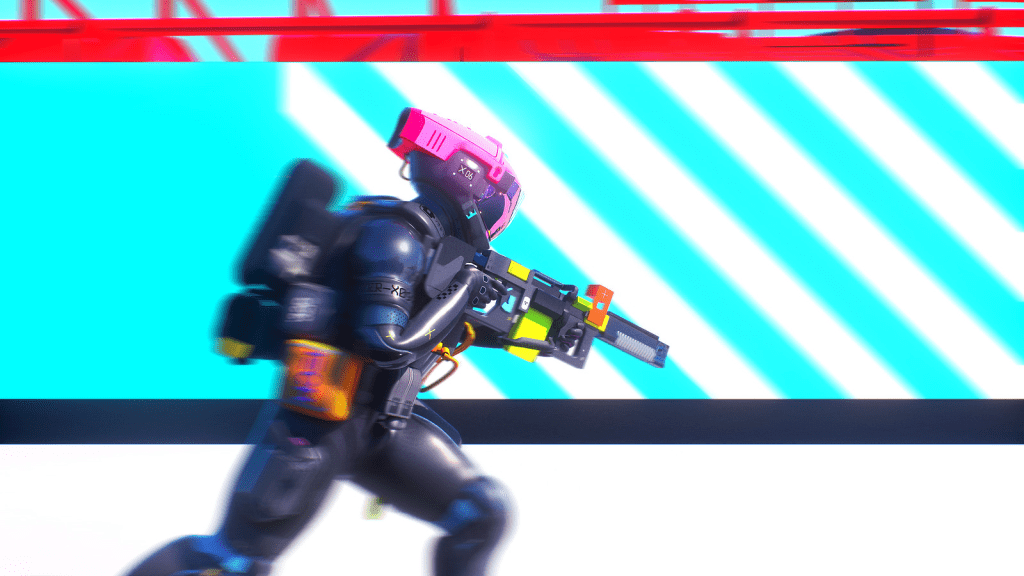
What appeals to me about Marathon, I think, is how all of the aforementioned elements manage to blend together to create an experience that is more than the sum of its parts. Its gameplay manages to be entertaining and engaging on a micro scale, whilst simultaneously offering meaning and context on a more macro scale, which appeals to my singleplayer and lore fanatic brain. I’m enjoying chipping away at the world and trying to piece together what is going on, whilst simultaneously enjoying the responsive and snappy feel to the moment-to-moment shootouts. It’s immersive and engaging for two very different reasons at the same time, it looks and sounds unique and fresh. And what’s more, it feels familiar enough in its foundational Bungie building blocks and sandbox to not feel too intimidating, and I am having a blast. Excited to see where this game ends up going over the course of its lifetime, which I can only hope is as long as the reins of Halo or Destiny were before it.


 thegameoverarchives.com
Leave a comment